In my opinion, there are two main ways to design a new chintz-based collection. The first is to create a homogenous collection, deeply rooted in traditional Indian printing methods and classic motifs. The second is to juxtapose and bridge the chintz pattern with motifs from different eras and geographies (such as geometrics or abstract florals). While I massively appreciate homogeneous chintz collections, they can sometimes feel visually heavy or purely derivative. Therefore, I aim for diversification.
Here, I present two heterogeneous, chintz-based collections. I believe that a successful modern chintz collection thrives in that sweet spot of dynamic harmony—a precise balance between juxtaposition and bridging.
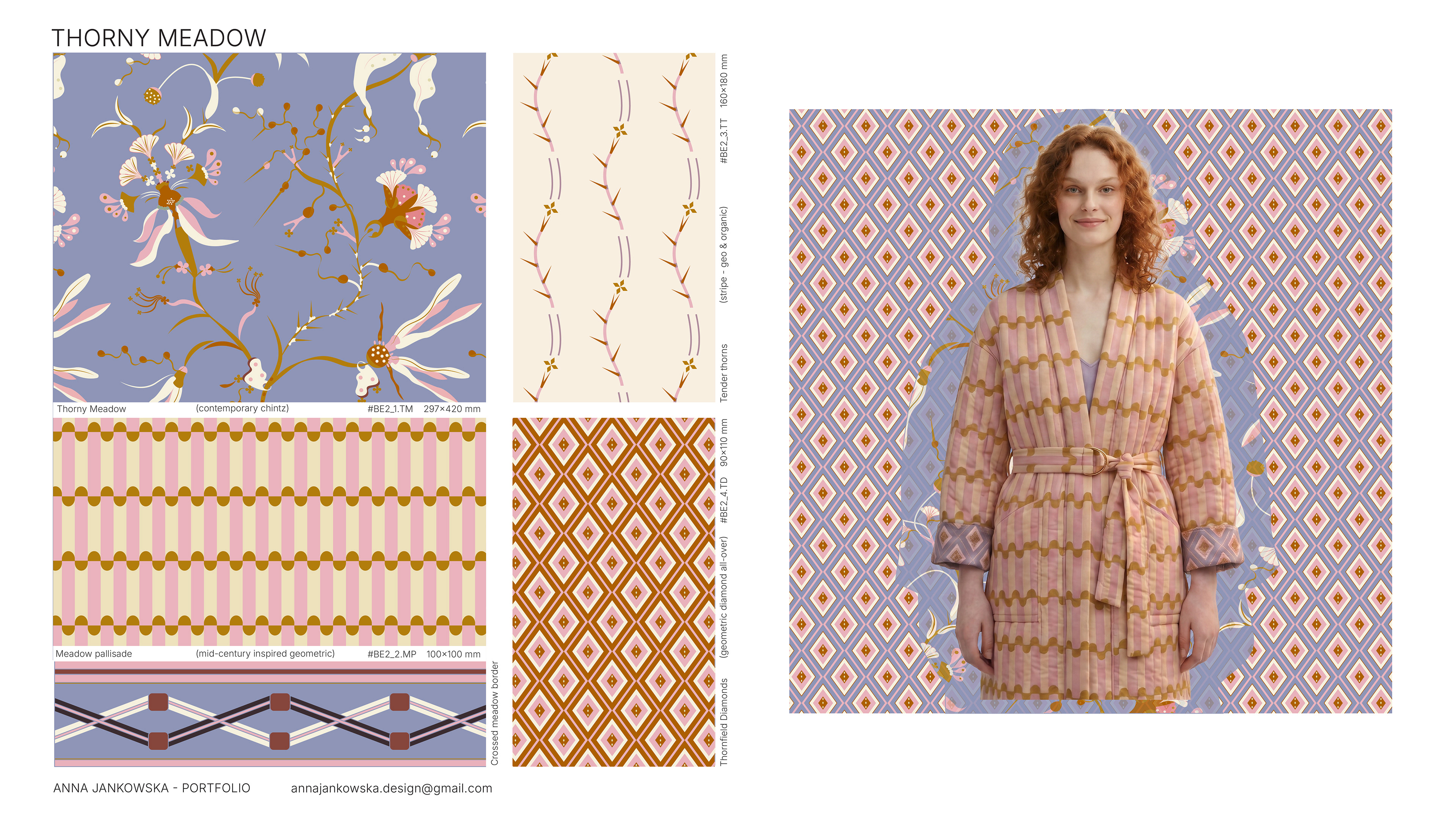
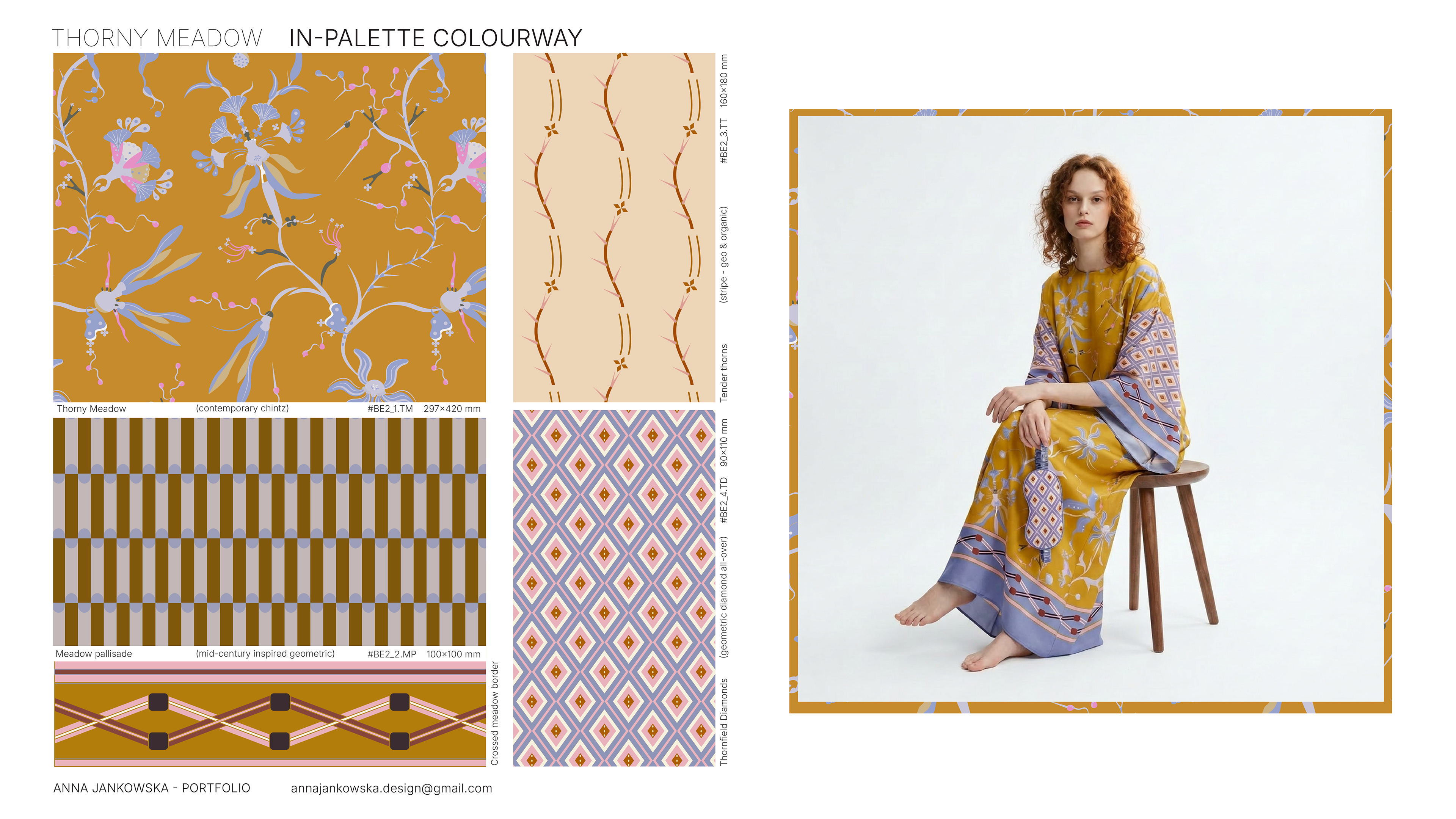
Thorny Meadow: Juxtaposition
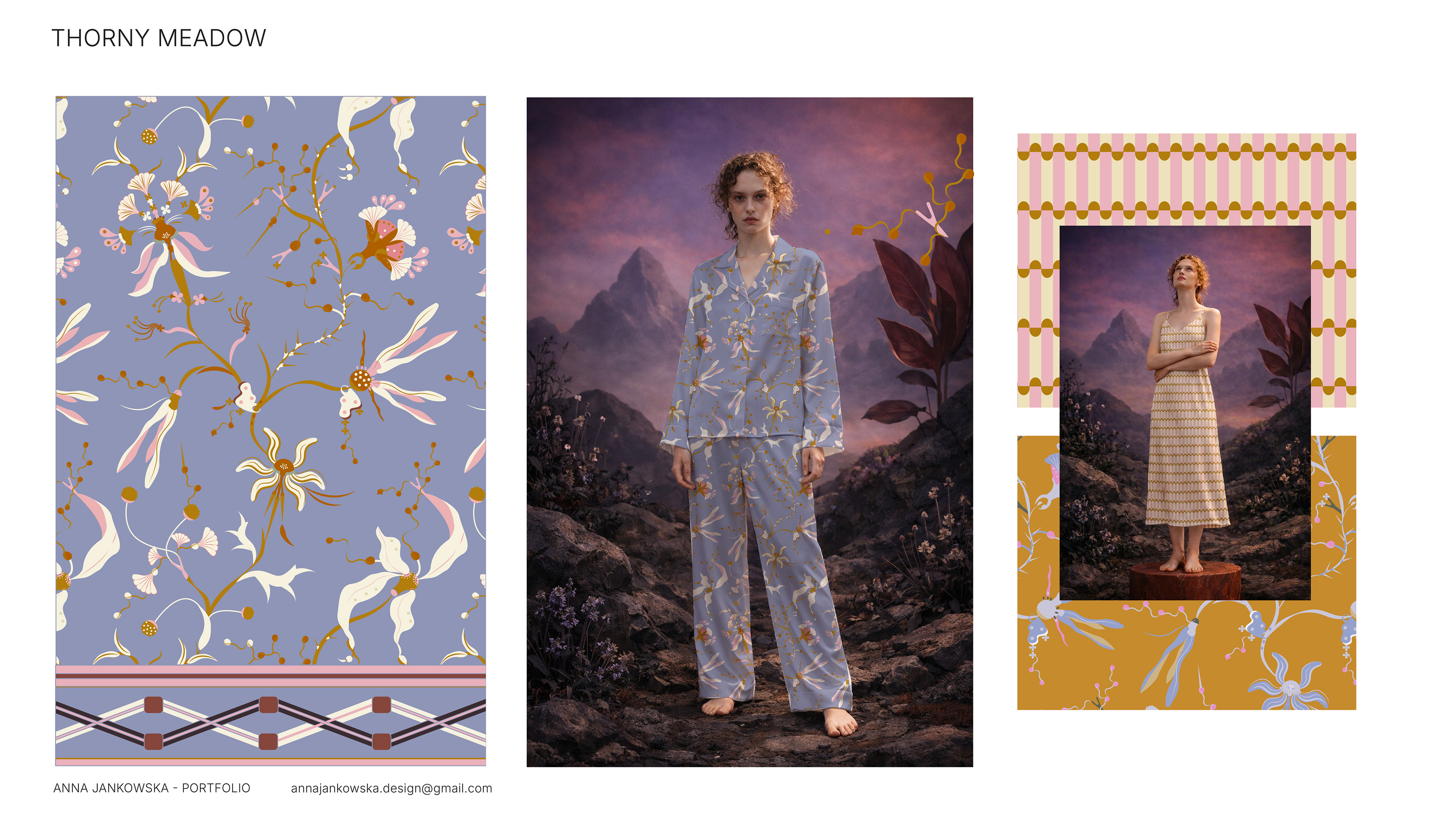
My objective with "Thorny Meadow" was to build a mini-collection founded on the tension of juxtaposition, pairing a chintz-inspired print with mid-century geometric patterns. The goal was to create a harmonious yet dynamic dialogue where the softer, fluid, yet sharp organic forms are anchored by the rhythmic, clean shapes of the geometrics. It is harmony achieved through the contrasting nature of the shapes.
Desert Gardens: Bridging
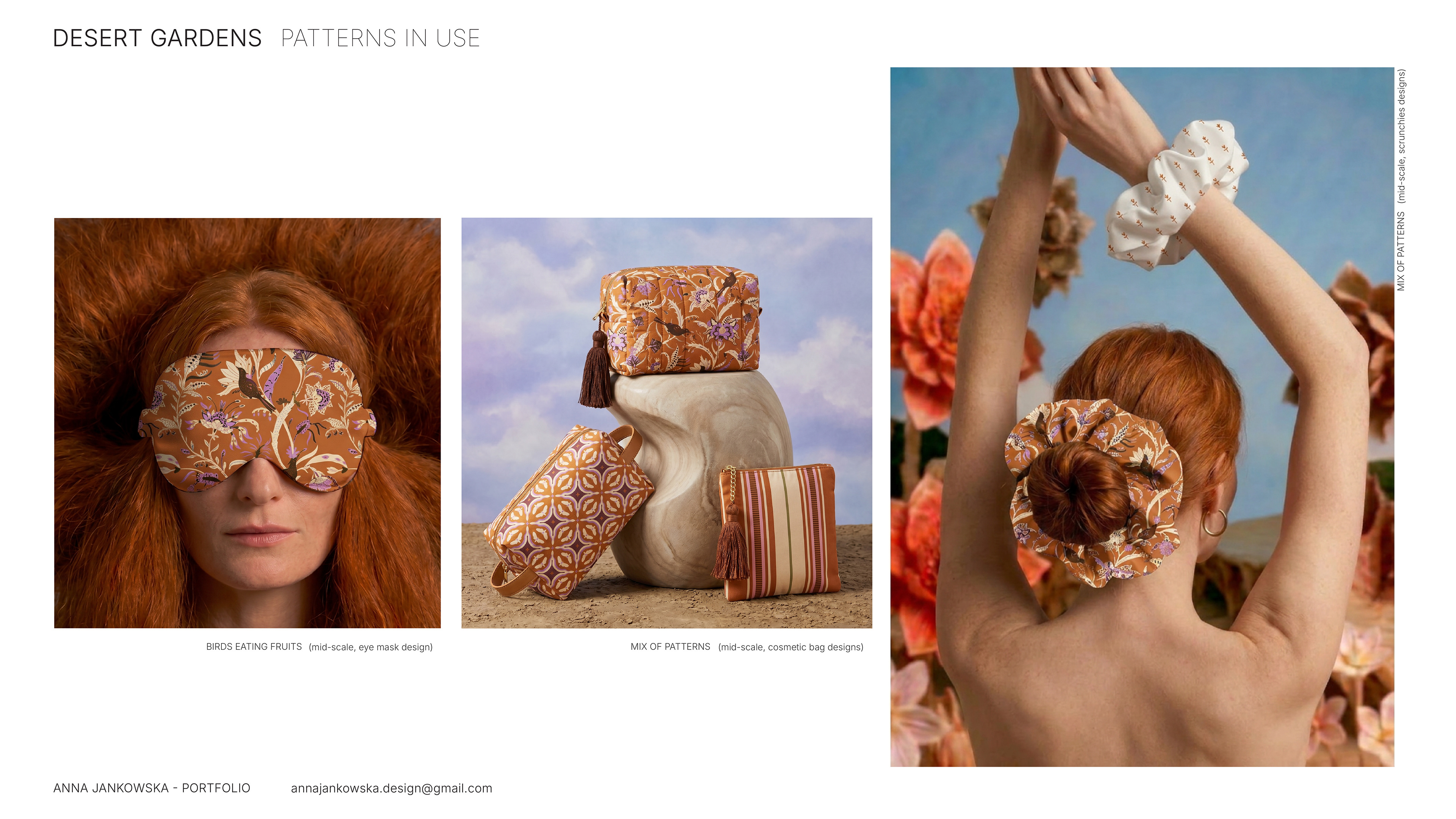
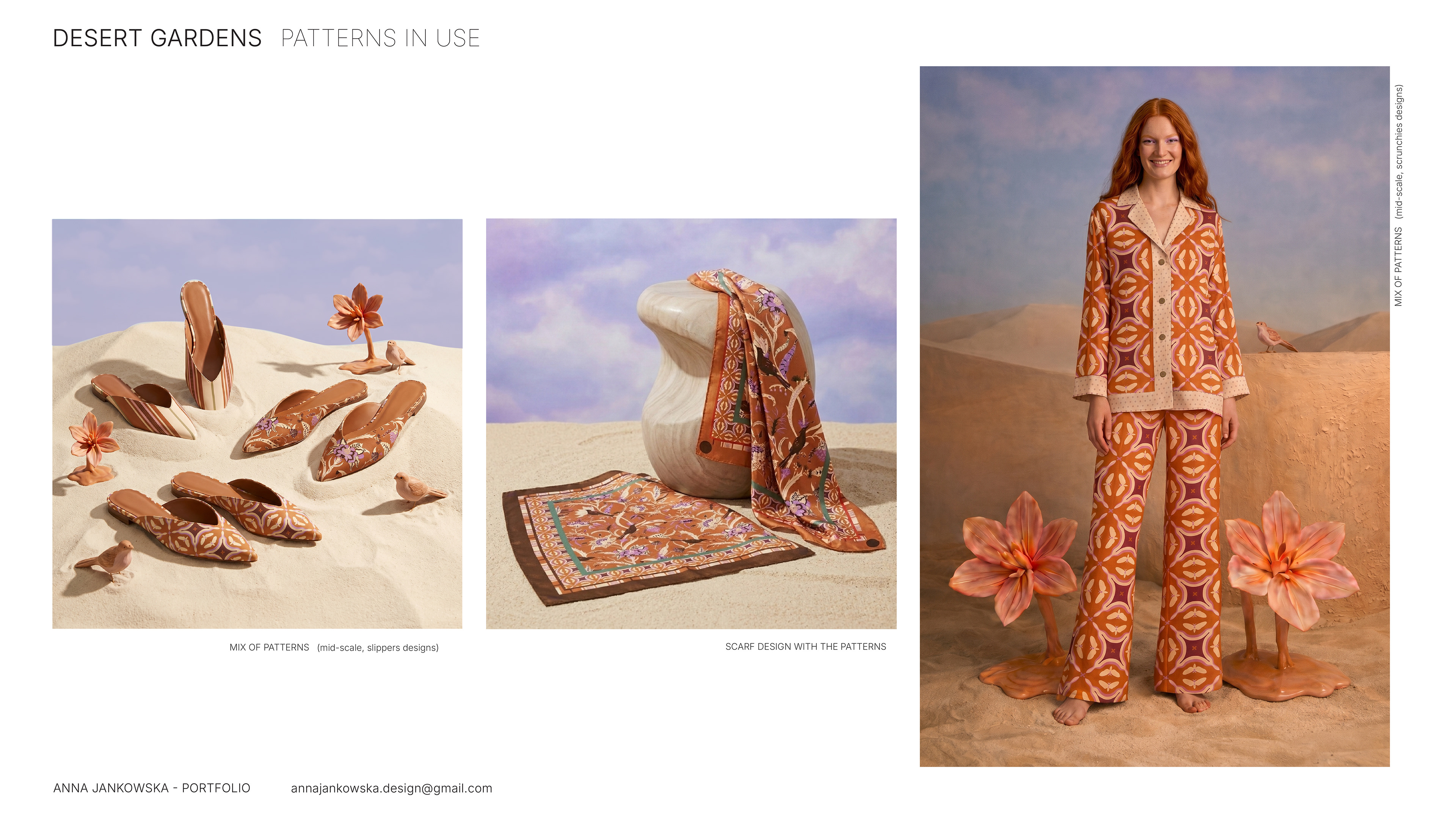
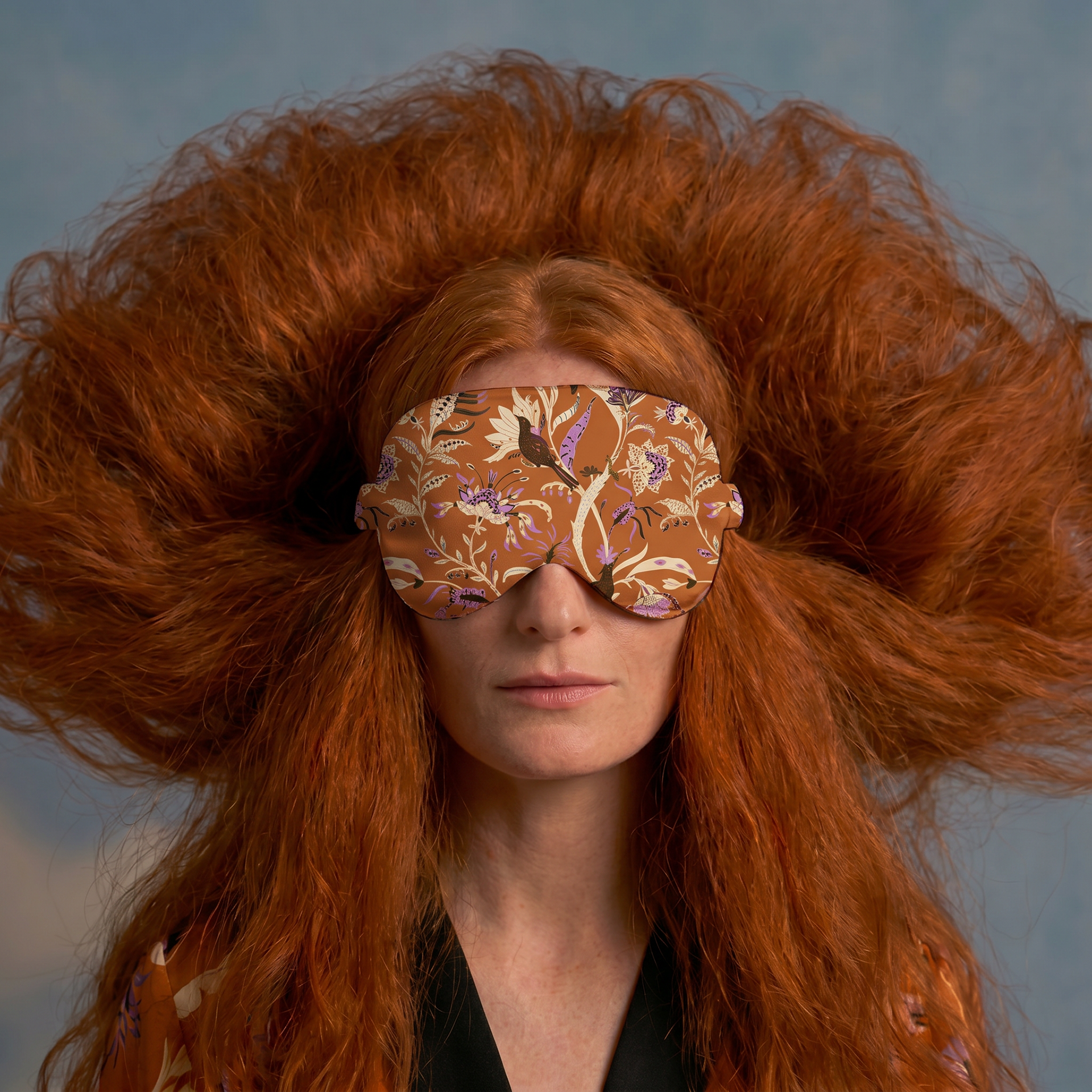
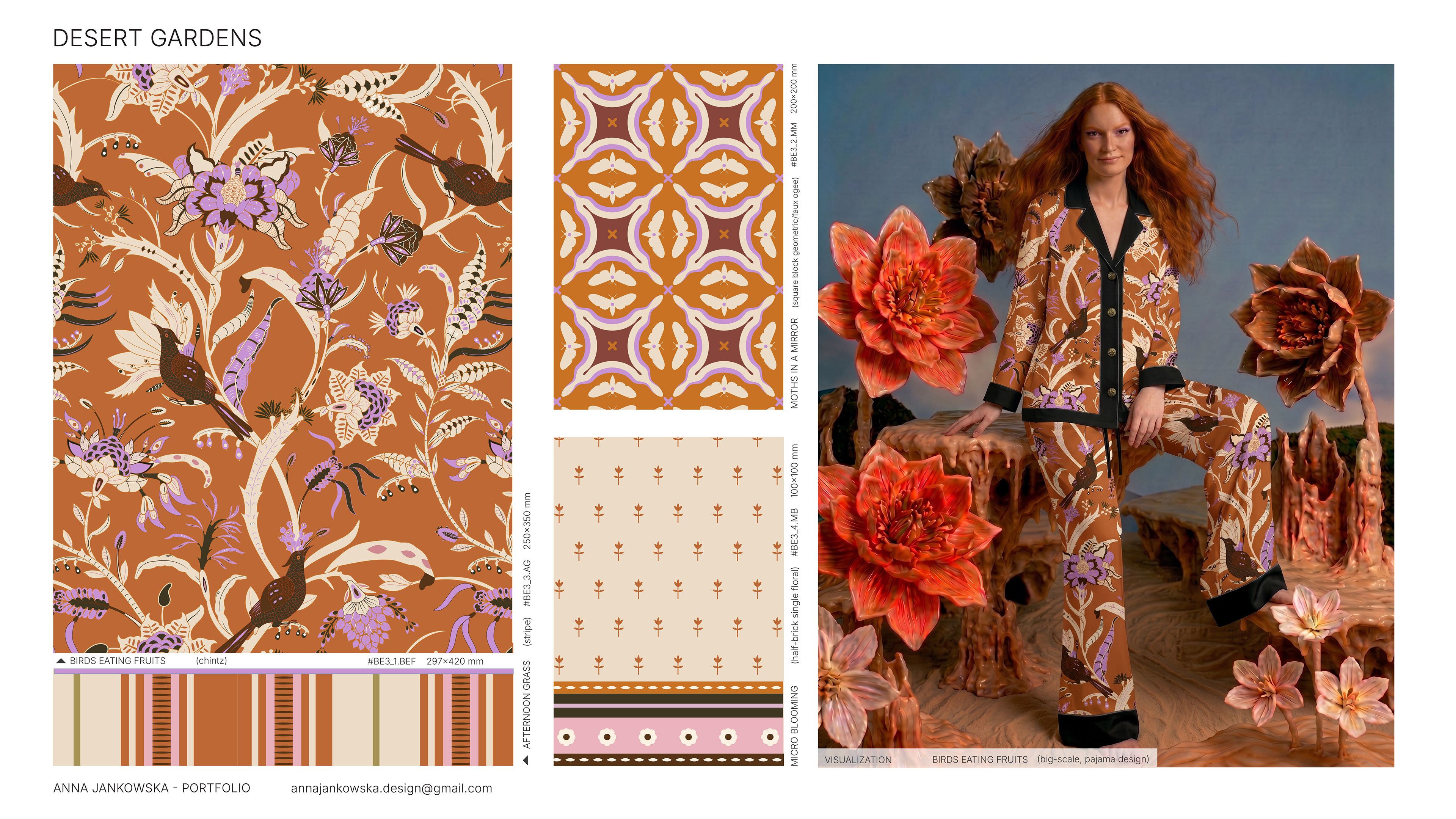
The second mini-collection, "Desert Gardens," focuses on bridging rather than juxtaposing. With this collection, I wanted to explore the historical era where chintz found its most definitive modern re-contextualization: the 1970s. During this decade, traditional bohemian prints were infused with fresh, modern color palettes and paired with new "pattern friends"—big, bold, funky geometrics that gave them a stylistic embrace, carrying them into contemporary design.
The second mini-collection, "Desert Gardens," focuses on bridging rather than juxtaposing. With this collection, I wanted to explore the historical era where chintz found its most definitive modern re-contextualization: the 1970s. During this decade, traditional bohemian prints were infused with fresh, modern color palettes and paired with new "pattern friends"—big, bold, funky geometrics that gave them a stylistic embrace, carrying them into contemporary design.
To capture this iconic '70s vibe, I paired the chintz with a large-scale faux-ogee—a square-block geometric that mimics the distinct rhythm of the era—and grounded the collection in a warm, nostalgic palette of ochre, brown, pink, and violet. Finally, I included a balanced, wide stripe and a small-scale micro-floral, a detail directly inspired by the functional, everyday block-printed garments of India.